















According to the traditional ruler, what initially appeared to be community vigilante action gradually transformed into highly organized armed groups driven by revenge.
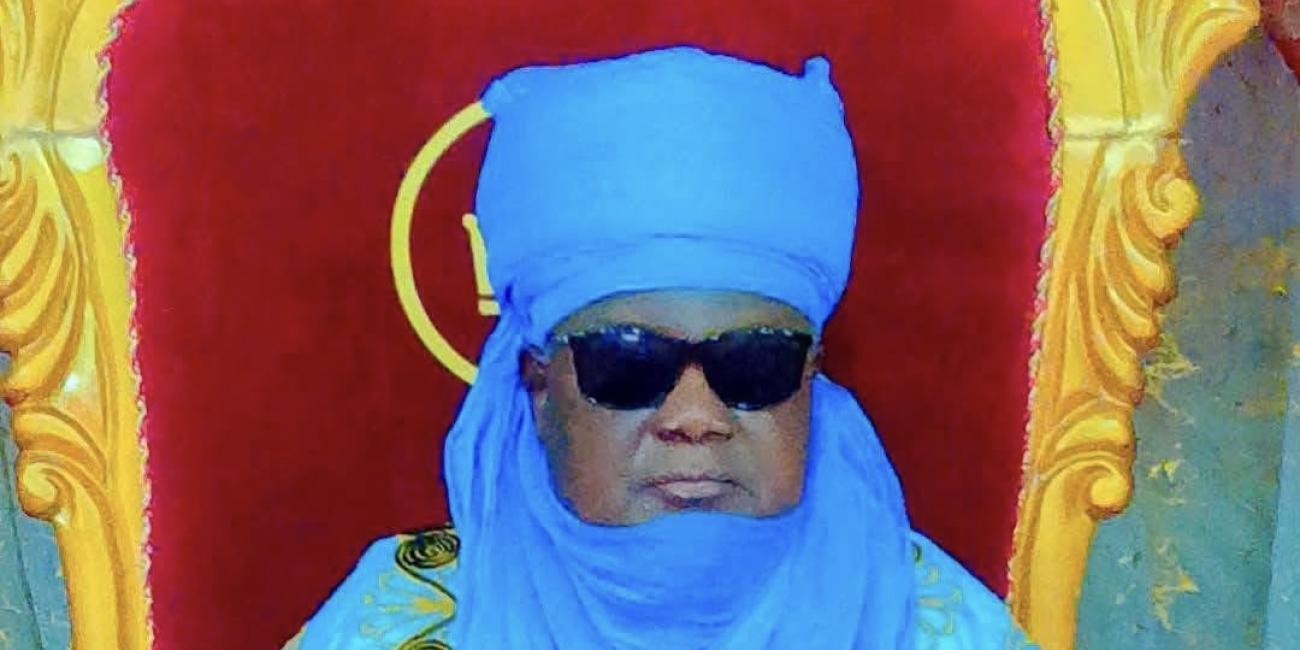
The Emir of Zamfara (Sarkin Zamfaran Anka), Alhaji Attahiru Muhammad Ahmad, has revealed that the wave of banditry devastating Zamfara State expanded after fighters were recruited from neighbouring Mali, Burkina Faso and the Niger Republic to join revenge attacks.
Speaking in an interview conducted in Hausa by JBC and monitored by SaharaReporters, the traditional ruler disclosed that as the violence intensified, invitations were extended beyond Nigeria’s borders to mobilise armed fighters.
The traditional ruler traced the roots of the deadly banditry crisis in northern Nigeria to widespread frustration over the failure of the justice system, saying the violence later evolved into organized revenge attacks that spread across international borders.
According to him, the violence started after communities became convinced that suspected criminals were routinely arrested by security agencies only to be released by the police or the courts without punishment.
He observed that, due to prevailing public perceptions, people resorted to jungle justice against anyone labeled a “thief,” rather than handing such individuals over to the police.
According to the traditional ruler, what initially appeared to be community vigilante action gradually transformed into highly organized armed groups driven by revenge.
“Messages were sent as far as Mali, Burkina Faso, and Niger Republic, calling people to come and join the revenge attacks in Zamfara,” he said.
Rejecting claims that the crisis was fundamentally a conflict between farmers and herders, the Emir said such an explanation ignored the historical roots of the violence.
“Many people claim the crisis is simply a conflict between farmers and herders, but that is not true in our experience in Zamfara. Individual farmers and herders may have disputes, but this was never originally a war between entire farming and herding communities. Traditional rulers and district heads were not responsible for starting it. Anyone who says it is merely a farmers-versus-herders conflict is oversimplifying the issue,” he said.
According to the monarch, the major cause of the crisis was the failure of authorities to enforce justice and hold criminals accountable.
“The real cause was the failure to punish criminals and ensure justice. If you ask the police, they will tell you. If you ask judges, they will tell you the same thing,” the traditional ruler said.
The Emir also linked the prolonged insecurity to Nigeria’s historical formation, arguing that the country’s political structure created divisions that undermined national unity and weakened the justice system.
“The root of the problem lies in the way Nigeria was created. When Nigeria was formed, the different peoples were brought together even though they had little in common. That became the foundation of the country,” he said.
“We never truly accepted one another. Instead, everyone feels entitled to protect what belongs to his own group. Had people been allowed to develop separately and cooperate voluntarily, perhaps things would have been different. Instead, they were amalgamated into one country.”
He continued: “Because of that, people’s loyalty is often not to Nigeria as a nation but to their ethnic group or region. That is one of the reasons for the lack of justice.”
The monarch further argued that poor infrastructure, inadequate public services and uneven development had worsened rural neglect, forcing many Nigerians to migrate to urban centres.
“If there were good roads linking every village in Nigeria, if there were electricity everywhere, hospitals everywhere, and good schools everywhere, why would everyone rush into the cities? If a town is only 50 or 70 kilometres away, people could simply commute to work. Even if cities continue to grow, the pressure would not be like it is today,” he said.
While acknowledging that clashes between farmers and herders have increased over the years, the Emir blamed government policies for worsening tensions by allowing grazing routes to disappear without providing lasting solutions.
“Regarding the farmers-herders issue, government policies also contributed. Grazing routes were taken over for other developments. Land became scarce, forcing herders and farmers into conflict. Whenever disputes arose, they were not resolved properly or taken to their logical conclusion. Instead, they were ignored,” the traditional ruler said.
The monarch also criticised the growing economic disparity between elected officials and ordinary Nigerians, saying the widening gap had contributed to hardship and public frustration.
“There is also a huge gap between the salaries of ordinary workers and those of political leaders. Such inequality contributes to people’s suffering. If leaders truly acted justly and fulfilled their responsibilities before God, many of these problems would reduce,” he said.
Asked what steps could end the violence, the Emir said all those entrusted with authority must carry out their responsibilities with integrity, justice and the fear of God.
“Everyone should perform his duty with the fear of God. Whether you are a government official, a traditional ruler, or hold any position of authority, you are accountable before God,” he said.
The traditional ruler further stated that some individuals connected to bandit groups had continued to profit from the conflict while undermining efforts to achieve justice and lasting peace.
“As for the leaders of the bandits, they know everything happening around them. They receive bribes and are informed of developments. Some even send their own children into the groups while benefiting financially. They say they want to test whether justice can ever be achieved,” he said.
“But instead of justice, bribes are paid to influence what happens. That is why peace has remained difficult to achieve. Even those who appear innocent often become caught up in the violence and its consequences.”