














Natives of the Federal Capital Territory (FCT) under the aegis of the Abuja Original Inhabitants Youth Empowerment Organisation (AOIYEO) have rejected the federal government’s decision to include the nation’s capital among the pilot locations for the National Ranching Policy.
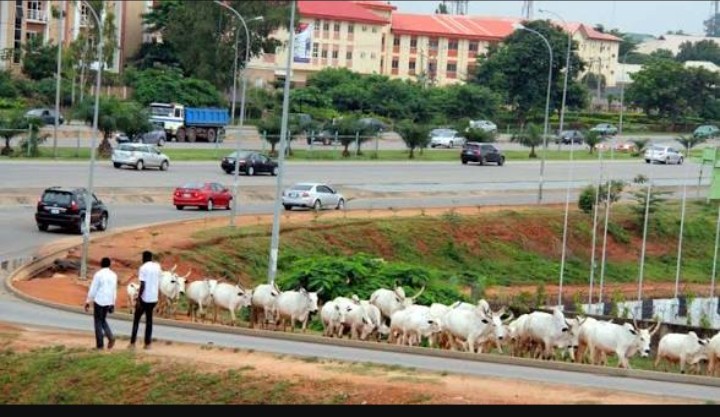
The group warned that establishing ranches in the FCT would conflict with the Abuja Master Plan and could threaten the ancestral lands, farms and livelihoods of indigenous communities in the nation’s capital.
The executive director of AOIYEO, Commandant Isaac David, stated this at a press conference in Abuja, yesterday. The action followed the disclosure by the minister of Livestock Development, Alhaji Idi Maiha, that the federal government had selected six locations for the pilot implementation of the new ranching model.
Maiha made the disclosure after briefing President Bola Tinubu on the activities of his ministry at the Presidential Villa, Abuja, on Tuesday. He said that the pilot programme would commence at the Wase Grazing Reserve in Plateau State as a proof of the concept for the new ranching model.
Reacting to the decision, David said the inclusion of the FCT was unacceptable to the original inhabitants, insisting that there was no provision for ranches in the Abuja Master Plan.
“We reject this decision of the government and we will continue to reject these ranches in FCT because FCT is not meant for it. The FCT Master Plan, there is no space for, provision for ranches in FCT.
“The FCT land is meant purely for the Federal Capital City and administrative purposes. There is no ranch purpose on it. So, for this reason, we reject this. We are asking the minister to reason with us,” he said.
David said the original inhabitants had made enormous sacrifices for the establishment and development of the Federal Capital City, but had yet to receive corresponding benefits from successive governments.
He said, “We have been here before all this, before the pronouncement of relocation of Federal Capital City in 1976. The government have never considered us to cater for us with the provision of farming policy or come up with the Original Inhabitants Community Development Policy and Integration Framework.
“But imagine bringing foreigners, you are even considering their individual business of rearing cattle to set up ranches for individual business that they are not making any impact to the Federal Government. No revenue, nothing.
“We that have made contribution to the Federal Government by allowing peace to reign in FCT and using our land to build Federal Capital City, what is our achievement?”
The AOIYEO leader warned that failure by the government to engage indigenous communities on the issue could create serious tension in the territory.
“For this reason, we reject this. Failure not to reason with indigenous people or offer a dialogue roundtable discussion, then it will become a national threat. There is no where in the world where the government introduced a national ranching policy in the country’s capital city, it is not done,” David warned.
He also appealed to President Tinubu to reconsider the decision, saying that the proposed ranches could compound existing security and land ownership challenges confronting rural communities in the FCT.
David alleged that the ranching proposal was part of attempts by some interests to undermine the administration of the FCT Minister, Nyesom Wike, and destabilise the peace being witnessed in the territory.
“We are aware that the northerners are not happy that a southerner, Chief Nyesom Wike, was appointed minister of the FCT by the president, and they want to do everything within their powers to destabilise the progress and peace in the territory. We know their plans and we will not allow them to succeed in their plans,” he alleged.
He expressed concern that the establishment of ranches could worsen insecurity in indigenous communities, particularly if large tracts of farmland were acquired for the purpose.
“There are no ranches in states but the rate of kidnappings and killings are beyond imagination. Not to talk of having a ranch owned by Fulanis, that means you want them to start killing our people and chase us out of our ancestral land, because they will want to claim all our farmlands for their ranches.
“We condemn it and it must not be allowed to stand. This is the nation’s Federal Capital Territory, not just another state,” he said.
The indigenous group consequently called on the FCT Minister, Nyesom Wike, to oppose the proposal and ensure that ranches were not established in the territory.
“We are calling on the FCT Minister, Chief Nyesom Wike, to kick against it and not allow it to stand, because it would spoil the good works he has been doing in the FCT since he took over as Minister of the FCT,” David said.
He further criticised what he described as the government’s policy of relocating internally displaced persons (IDPs) to the FCT, arguing that neither IDP settlements nor ranches were contemplated in the original Abuja Master Plan.
“They started this by bringing IDPs. And the Master Plan, there is no provision for IDPs. The Master Plan, has no provision for ranches in FCT.
“These are not the reasons for moving Federal Capital City from Lagos to here. So why now?” he queried.
Rather than using the FCT for ranching activities, David urged the Federal Government to consider establishing a dedicated state or designated territory where cattle-rearing activities could be concentrated.
“Federal Government should come up with a policy of creating a state for Fulani people. Very simple. Create a state for Fulani people so that they can be there with their ranches, since this is their business,” he said.
He noted that different parts of the country had traditionally been associated with different economic activities, arguing that the ranching policy should not be implemented at the expense of indigenous communities.
“Other Nigerians have their business there too. They are known for their cultural business. We were farmers. Benue are farmers. Plateau is, they are farmers. So Fulani are known for cattle business.
“So they should have their state where they can train their cattle there,” he said.
David, however, said members of the Fulani community who wished to reside in the FCT should be treated like other Nigerians and comply with existing land-use regulations.
“If it is compulsory for them to live in FCT, then they should buy plots, just like other Nigerians buy plots, build shops or build their houses. Then they should fence their land and put their cattle,” he added.
The group urged the federal government to suspend the proposed inclusion of the FCT in the pilot ranching programme and convene a dialogue involving indigenous communities, the FCT Administration and relevant stakeholders before taking any further action.