











This is not merely the story of a missing kidney or the price of the human kidney in Abuja. It is the story of how poverty, medical expertise, forged identities and aggressive middlemen may have been brought together to turn vulnerable young Nigerians into sources of human spare parts.
And it might have remained hidden but for Martins Vincent Otse, popularly known as VeryDarkMan.
On August 18, 2026, 22-year-old Samuel Ezekiel walked into the activist’s office with a frightening account: he said a hospital in Abuja had removed his left kidney.
VeryDarkMan later described it as one of the scariest cases he had handled. But his organisation did not immediately broadcast Ezekiel’s allegation as fact. The young man was sent for medical examinations at Nisa Premier Hospital and later at the Federal Medical Centre, Jabi.
According to VDM’s lawyer, Marshall Abubakar, both examinations confirmed that Ezekiel’s left kidney was absent. With the medical question partly answered, another emerged: how, when and under what circumstances was the organ removed?
The answer has now developed into a police investigation involving two doctors, alleged recruiters, forged documents and a private hospital in Abuja.
A New Name And $1,250
The Nigeria Police Force said Ezekiel’s kidney was allegedly removed on April 24, 2026, at Wellington Hospital in Life Camp, Abuja.
Before the procedure, his identity was allegedly changed through an affidavit from Samuel Ezekiel to “Hassan Abubakar.” Investigators said documents used in the alleged arrangement included altered names, National Identification Numbers, birth records, affidavits and consent papers.
Ezekiel was paid $1,250—about ₦1.7 million—according to the police.
During the parade of suspects, the young man admitted that he signed documents and received the dollar payment. He alleged, however, that his friend, Emmanuel Ode, deceived him about the consequences of giving up a kidney and assured him that the procedure was harmless.
Ezekiel said he handed the money to Ode, who converted it and spent much of it on phones, power banks, Wi-Fi devices and other items. Ezekiel was subsequently taken to Cross River State, where he remained during his recovery. His mother reportedly knew nothing about the procedure and received none of the money.
That admission changed the public understanding of the case.
It was no longer simply the nightmare of a patient being sedated and secretly stripped of an organ. It became something more complicated but no less disturbing: the alleged exploitation of a poor young man who was renamed, persuaded to sign documents, paid a fraction of what others may have gained and left to live permanently with one kidney.
A signature does not automatically establish informed consent. Consent obtained through deception, false information or concealed medical risks is open to serious legal and ethical challenge. More importantly, Nigerian law does not permit the commercial sale of human organs merely because the person involved signed a document.
The Arrests That Followed VDM’s Intervention
VeryDarkMan’s role went beyond posting a viral video after the event.
After Ezekiel approached him, his organisation paid for independent medical verification and submitted a petition through the Martins Vincent Otse Initiative. The hospital reports and the name of the facility where the disputed operation allegedly took place were then made public.
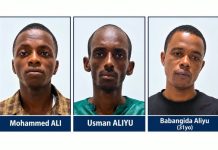
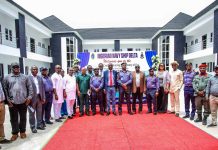
Police Special Tactical Squad operatives conducted a sting operation on August 19 at Auta Balifi in Karu Local Government Area of Nasarawa State. Four suspects were subsequently arrested and paraded.
They were identified as Emmanuel Ode, 23; Dr Benjamin Oyime, 48, a nephrologist and consultant to Wellington Hospital; Dr Daniel Otukpa, 53, another nephrologist and the hospital’s acting director of clinical services; and David Idoko, 25.
The police alleged that Ode recruited vulnerable young people under false pretences. Investigators also said the suspected network targeted financially distressed and poorly educated youths in Nasarawa State and communities bordering the Federal Capital Territory.
A second alleged victim told investigators that he had been recruited by the same agent in 2022 and paid ₦7 million after his kidney was removed. VeryDarkMan also alleged that Ode had previously given up one of his kidneys before becoming involved in recruiting others.
Abubakar told Channels Television that more than 10 young men around Masaka, Mararaba and Nyanya might have been caught in similar arrangements. He further alleged that some kidneys were transferred for between ₦50 million and ₦70 million while those from whom the organs were taken received only a small fraction.
Those figures have not been independently established. They form part of the allegations that investigators must now test by examining medical records, bank transactions, telephone communications, transplant registers and the identities of recipients.
The four suspects have not been convicted, and the allegations against them remain subject to investigation and prosecution. Wellington Hospital had not issued a detailed public response to the claims at the time of the initial reports. Peoples Gazette reported that calls to the hospital’s publicly listed telephone number seeking comment went unanswered.
An Old Market With New Suspects
The Abuja–Nasarawa corridor has appeared in organ-trafficking reports before.
In 2023, a Daily Trust investigation exposed what it described as an underground kidney market in which brokers allegedly targeted poor young men in Masaka and neighbouring settlements. One of the cases involved a 16-year-old boy whose age was allegedly falsified through an affidavit before his kidney was removed at an Abuja hospital.
The Nigerian Bar Association subsequently condemned the trade and offered legal assistance to victims. Yet three years later, the Wellington Hospital investigation appears to reveal the same alleged machinery: poor youths, brokers, affidavits, private medical facilities and recipients shielded from public scrutiny.
Under the National Health Act 2014, tissue may be removed from a living person only with informed consent and in accordance with prescribed medical protocols. The Act prohibits removing tissue for sale or commercial purposes and bars donors from receiving financial rewards beyond reasonable expenses. It also requires transplants to be conducted at authorised hospitals with appropriate oversight.
If police establish that false identities, commercial payments and forged consent documents were used, the case cannot be dismissed as a private agreement between willing adults.
Why Nigerians Are Praising VDM
The public response has largely centred on the fact that Ezekiel’s complaint gained official attention only after he approached VeryDarkMan.
Videos combining VDM’s initial intervention with footage of the police parade attracted hundreds of thousands of views. The dominant reaction was gratitude that someone with a large platform had listened to a poor young man who might otherwise have lacked the money for scans, lawyers or access to investigators.
“Kudos to VDM,” @Brightosas9595 wrote, reflecting the prevailing mood in one of the viral threads.
Another user, @MrAyo123, argued that Ezekiel’s poverty was central to the story. Without VDM’s intervention, he said, the young man could not have paid for legal representation or independent medical examinations.
Others were less sympathetic after Ezekiel admitted receiving money. They described him as reckless for accepting the arrangement and allegedly allowing the proceeds to be wasted on gadgets and accommodation.
But that argument risks missing the larger crime under investigation. The law does not allow doctors, brokers or recipients to purchase a kidney simply because poverty has made the owner willing to sell it. Desperation does not transform organ trading into legitimate medicine.
Beyond The Police Parade
The real test will come after the television cameras leave.
Who received Ezekiel’s kidney? Who paid for it? Who performed the surgery? What medical explanation was provided to the transplant recipient? Why was the donor’s identity allegedly changed? Which officials produced or accepted the affidavit? Were the hospital’s transplant protocols followed? And are there other young people living silently with one kidney after passing through the same network?
VeryDarkMan has forced those questions into the open. The police must now ensure that the case does not end with a dramatic parade of suspects.
Justice will require a transparent investigation, prosecution where evidence supports it, medical care and compensation for victims, and scrutiny of every hospital, broker and recipient connected to the alleged network.
Otherwise, Ezekiel’s case will become another viral outrage that briefly shocked Nigeria before disappearing, while the market that allegedly bought his kidney quietly searches for its next poor young man. But with the new focus, the prices of human kidneys in Abuja have definitely changed, with still undetected middlemen raising the benchmark.
GwG