














By Olusegun Adeniyi
In my column of 17 March 2021, ‘Kidnappings Incorporated!’, I argued that abduction for ransom in Nigeria is no longer a crime of desperation but an industry, featuring the hallmarks of a business model that includes structure and returns. Three months ago, in a sequel to that piece, I wrote about the ordeal of the late Major General Rabe Abubakar (rtd), who was ambushed (along with his wife) on the Karaduwa–Matazu Road in Katsina State and held for two weeks before he died in captivity. On the evening of last week Wednesday, I was a witness to such horror.
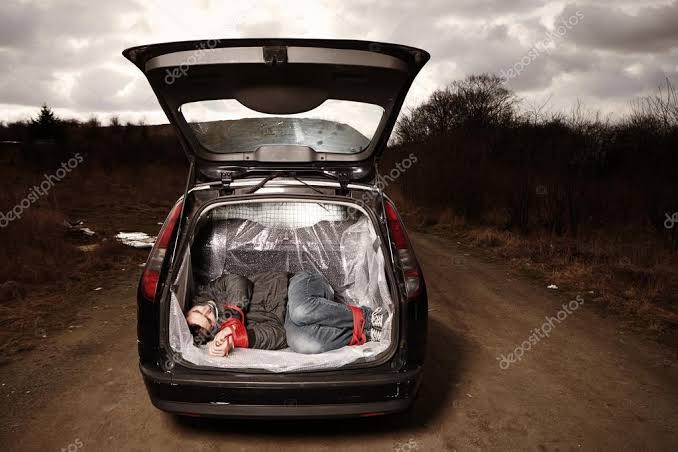
It was about 5:10 pm. I was driving home from the office when a saloon car moved into my line of sight. One boy was standing up through the open roof. Another hung out his head from the left side of the vehicle, with about three other boys cramped inside. They drove so fast that I wondered what was pursuing them. By the time I drove to the next junction where a little traffic held them, I noticed something strange. Was it a product of my imagination that someone was being held in the car boot? By this time, the traffic had eased and the car turned left with speed. I decided to give it a chase. When I moved closer, the car boot opened again and a man waved desperately before closing it back. He had no shirt on. Now, I knew there was no ambiguity about what I was looking at. This must be a kidnap victim.
I decided in that instant to follow the vehicle. Familiar with the road, I knew there was a police checkpoint not far ahead, and for a few minutes I allowed myself to hope that the people inside that car with sinister intentions would be apprehended. The arithmetic seemed simple. They were driving into the arms of the law; all I had to do was stay behind them. But just a few metres to the intersection where the Police Hilux was parked, the car made a sharp U-turn, as though the driver had sensed the trap closing, and doubled back the way we had come. I had a choice: turn and keep chasing a diverted car or alert the policemen. I chose the latter.
What happened next is the part of this story I have been unable to shake off for the past eight days. I drove near the police vehicle and began screaming, almost hysterically. I described what I had just witnessed and expected the urgency that ought to attend a possible abduction unfolding in real time. This was something the two policemen probably would also have witnessed were they alert. Because the car actually turned beside their ACCOS (Abuja Crime Control Squad) Hilux vehicle. Initially, the disposition of the two officers suggested they were deciding whether this was worth their trouble, not how quickly they could respond. Somehow, I managed to convince them but after picking up their pistols, they attempted to enter my vehicle. “You are not using your own vehicle?”, I asked. “The vehicle is not working,” one of them replied. When I looked closely, I realized the Hilux appeared to have been grounded there with the front tires deflated. By the time the two policemen entered my vehicle and we set off, I knew we were chasing the wind, and at the next junction where the road forked three ways, the trail went cold. As if reading my thoughts, one of them asked, “How do we know which way they took?” It was not a question; it was an admission that we had reached a dead end. Without saying anything, I drove the policemen back to their beat, thanked them and went home utterly dejected.
I did not take down the plate number of the car I was chasing. I have turned this over in my mind more than I care to admit. But the honest answer is that I trusted the police to close the gap once I had alerted them. That trust turned out to be the most expensive assumption I made all evening. And I don’t blame those police officers which is why I won’t mention the location. If a patrol vehicle is not working at the exact moment it is needed, and two minutes can pass at the mention of a person in a car boot without anyone reaching for a radio (I didn’t even see one with them), there is no point scapegoating those officers. That is a systemic problem that goes beyond punishing them for failure at their duty post. Besides, we should also ask ourselves whether we have not unwittingly created a situation in which our policemen, having themselves been brutalized by the state and society, approach their work with a high dose of cynicism.
On 22nd February 2017, as I once recalled, there was a bank robbery in Owerri, Imo State capital, which claimed the life of a police man whose family was abandoned until the footage of the Closed Circuit Television (CCTV) camera which captured the incident went viral. In the video clip, Sergeant Chukwudi Iboko was seen engaging the robbers in a gun duel, killing one of them before he was himself shot. He died the next day from his wounds. If the case had not been brought to the public, Iboko’s family would have had to carry their cross alone like many of their colleagues, including two other Sergeants who sustained injury from the same operation. So, in a way, we are reaping what we sow in the police.
But let’s get back to the main issue for today. In the sequel column on kidnapping that I mentioned earlier, I made the point that the Katsina State Government’s description of General Abubakar’s death in captivity as due to “natural causes” was a way of filing a crime under the heading of a medical footnote. I did not expect, three months later, to witness a smaller version of the same evasion at a checkpoint, reflected as a failure of urgency. “The vehicle is not working” is a perfectly ordinary sentence. It is also, in context, exactly the kind of sentence that allows a system to explain away its own paralysis without ever having to name it.
I am aware that police officers across this country die in the line of duty in numbers that ought to command more sympathy than they receive. And I made that point earlier. But sympathy for an under-resourced institution and honesty about its state of readiness are not mutually exclusive. Both things can be true: that our policemen are underpaid, undersupplied, and overexposed, and that a man waving from the boot of a moving car deserves a faster response. Sadly, I keep returning to the image of that man and it has disturbed my sleep many times in the past one week. Imagine how many similar moments happen on Nigerian roads in a week that nobody writes a column about, and you begin to understand the true shape of the security challenge. Yet until our security architecture can guarantee that “the vehicle is not working” is never again the reason a rescue does not happen, we remain a country that depends less on its institutions than on the mercy of God.
That man, wherever he is right now, is a reminder of what that costs.