





Human Rights Writers of Nigeria (HURIWA) has challenged the leadership of the South East Development Commission (SEDC) to provide transparent information about the achievements made in its first year with the approved budget of N140 billion.
The group emphasised that its team of researchers has been unable to find concrete evidence of any infrastructure set up in the South-East of Nigeria for the benefit of the Igbo people by the commission.
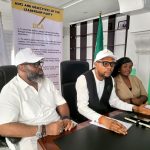
HURIWA’s National Coordinator, Emmanuel Onwubiko, recalled that efforts to obtain detailed information on the commission’s achievements from both the Senate Committee Chairman on SEDC, Orji Uzor Kalu, and the Chairman of the Governing Board, Emeka Wogu, have failed to produce satisfactory responses.
HURIWA in a media statement endorsed by the National Coordinator Comrade Emmanuel Nnadozie Onwubiko said the Governing Board Chairman of the SEDC Chief Emeka Wogu when asked what exactly the commission has achieved, informed us thus:
“We have set our road map etc.” HURIWA disclosed that the Senate Committee Chairman of the SEDC stated bluntly that he has no information to give us about any achievements made by the South East Development Commission since it was set up.
HURIWA recalled that the National Assembly had approved a budget estimate of N140 billion for the South-East Development Commission (SEDC) for the 2025 financial year.
This was contained in the final draft of the 2025 budget of N54.9 trillion passed by the National Assembly on February 14.
Recall that the SEDC board headed by Dr Emeka Wogu and Mr Mark Okoye as Chairman and Managing Director respectively was inaugurated on February 11 last year.
The budget also provided that other regional development commissions, such as the South–West Development Commission, South–South Development Commission, North -Central Development Commission, got the same approval of N 140 billion while North – West Development Commission got 145,61 billion.
The Nigeria Delta Development Commission (NDDC) got the jumbo budget among the development commissions with a budget of N626.53 billion.
The SEDC is saddled with the responsibility of rebuilding and rehabilitation of the Southeast region from the damage of the civil war.
Okoye, in his inaugural speech, quoted the World Bank as saying that South-East required an annual investment of $10 billion for the next 30 years to be able to bridge the infrastructure gap.
He said the SEDC would collaborate with the state governments, private sector, and development partners, we will drive the Southeast towards a $200 billion regional economy by 2035.
Okoye said the Commission would prioritise security and investment infrastructure development, agriculture, industrialisation, technology/innovation and human capital development
“The South East region faces numerous challenges at the moment, including a harsh investment Climate due to security concerns, low ease-of-doing business, unemployment and 2,500 active erosion sites resulting in the displacement of thousands of people,” he said.
The establishment of the South-East Development Commission (SEDC), according to HURIWA, had stimulated a groundswell of optimism and skepticism across Nigeria.
As the country’s latest effort to address the historical neglect and marginalization of the South-East region, the SEDC’s success hinges on its ability to navigate the complexities of bureaucratic inefficiencies, political interference, and funding uncertainties, according to economists.
Economists also stated that with its ambitious goals of driving development, promoting economic growth, and fostering social integration, the SEDC has the potential to transform the region – but will it deliver on its promises?
The response to this prophetic question posed by development economists is a direct NO because there is no evidence of any forms of development or infrastructural facilities put in place by the commission since it was set up and it began operations.
SEDC reportedly aligns with President Bola Ahmed Tinubu’s Renewed Hope Agenda, emphasising inclusivity and national cohesion. However, its success is said to hinge on viable and transparent partnerships with federal agencies, private investors, and transparent governance structures.
The Commission was officially established on 24 July 2024, when President Tinubu signed the bill into law, marking what observers said is a historic milestone for the region.Its Board was inaugurated on 12 February 2025, signalling the beginning of operations aimed at addressing decades of post-war neglect and fostering regional growth.
Even more promising is that Mark Okoye, a young and dynamic leader, has been appointed as the Managing Director and Chief Executive Officer of SEDC. His nomination by President Bola Tinubu on 6 December 2024, and subsequent confirmation by the Senate in January 2025 was expected to mark the beginning of phenomenal strides in the development of the South-East of Nigeria but from what is seen on ground in the South East.
HURIWA can comfortably say that the commission has failed spectacularly to take off in such a way that the good people of the South-East region can smile joyfully in admiration.
Okoye, formerly the MD/CEO of the Anambra State Investment Promotion and Protection Agency (ANSIPPA) and a former Commissioner under Governor Willie Obiano, is said by his supporters to have achieved an exceptional personal track record in public service and economic development.
HURIWA therefore demands accountability from the MD and the Board to tell the South East what they executed with the N140 billion reportedly cash-backed for the commission since it took off.
The commission is tasked with driving development in the Southeast states—Abia, Anambra, Ebonyi, Enugu, and Imo. Its mandate includes reconstructing war-damaged roads and houses, tackling ecological challenges, and unlocking the region’s latent commercial potential.
The key objectives of the SEDC include investments in agriculture, manufacturing, and technology to stimulate entrepreneurship and job creation.Infrastructure development is another major focus, for building roads, railways, and energy facilities to enhance connectivity and spur trade.
HURIWA is asking Igbo youths and intellectuals to demand accountability from the South-East Development Commission because the agency is created to serve the development interests of the Igbo people and it would be criminal if the resources approved by the Federal Government for the SEDC to energize and stimulate development in Igboland are shared and pocketed by political elites of Igbo states.
https://guardian.ng/news/huriwa-tasks-sedc-on-achievements-amid-n140b-budget/