











The National Assembly (NASS) and the presidency have failed to explain to Nigerians how a previously gazetted copy of the new tax laws suddenly needs a re-gazetting following claims of alterations to the one the lawmakers approved.
With January 2026 around the corner, few topics have dominated media discourse as much as the new tax laws.
Scepticism continues to greet the impending implementation, and while the government attempts to sell the idea to Nigerians, it did not do itself any favours when Abdulsamad Dasuki, a member of the House of Representatives, revealed that there were discrepancies between the NASS-approved copy and the gazetted copy.
“What was passed on this floor is not what is gazetted,” he said during plenary on December 17. “I was here, I gave my vote and it was counted, and I’m seeing something completely different.
“You find out what is before Nigerians, which is being sold to Nigerians at the Ministry of Information, which I personally went to buy. The gazette copies are not what was passed.”
Dasuki went further to describe it as an insult to the legislature and a breach of the constitution.
The constitution outlines provisions for separation of powers, and it is the legislature’s job to check the executive arm of government, while the executive reserves the right to veto a decision of the legislature if no more than two-thirds of the house outvotes the president.
In this instance, the presidency did not communicate a veto to the National Assembly. According to Dasuki, their decision was being misrepresented to the public.
“This is a breach of the Constitution and a breach of our laws, and it should not be treated lightly by this House,” Dasuki said.
“I’ll be pleading that all the documents should be brought before the Committee of the Whole. Members should see what is in the gazette and what they passed on the floor so that we can make the relevant amendment.”
Dasuki failed to call for a probe to ascertain how the legislative arm of government was undermined.
Reacting simply, Tajudeen Abbas, the Speaker of the House, said, “Your observation is noted, and action will be taken, I assure you.”
EXECUTIVE REACTS
On December 22, five days after Dasuki’s claims on the floor of the green chamber, Taiwo Oyedele, chairman of the Presidential Fiscal Policy and Tax Reforms Committee, said he could not tell if there were discrepancies because he did not have a copy of the National Assembly’s final decision.
What he had, he said during an interview with Channels TV, was the copy President Bola Tinubu approved.
“The official harmonised bills certified by the clerk, which the National Assembly sent to the President, we don’t have a copy to compare,” Oyedele said.
Temitope Ajayi, a Senior Special Assistant to the President on Media and Publicity, and Bayo Onanuga, Special Adviser to the President on Information and Strategy, also reacted to the developing legislative scandal.
Both men denied alterations. They called for patience and claimed that the House of Representatives was investigating the matter.
One would imagine that a publication of the originally gazetted copy would be enough to prove or disprove Dasuki’s claims and give Oyedele something to compare his copy of the law with, but the legislature did not tow that line.
FROM PROBE TO RE-GAZETTING
Instead of allowing the findings of a probe to go public, the National Assembly has chosen to revisit its copy and issue a re-gazetted version.
Via a statement on Friday, Akin Rotimi, spokesman for the House of Representatives, said that the National Assembly had ordered the re-gazetting of the tax laws and the issuance of Certified True Copies (CTCs) of the versions duly passed by both chambers.
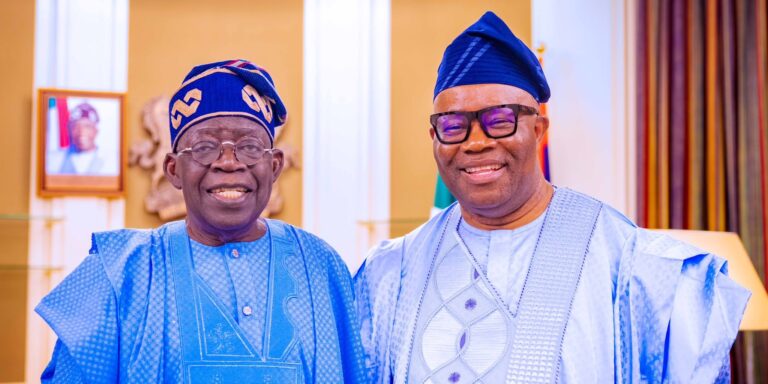
He said that both Abbas and Senate President Godswill Akpabio made the decision jointly.
“The Ad Hoc Committee, alongside other relevant committees of the National Assembly, working in collaboration with the Management of the National Assembly, is undertaking an institutional review to establish the sequence of events and to identify any factors that may have contributed to the circumstances surrounding the legislative and administrative handling of the Acts,” Rotimi’s statement reads.
“This includes a careful examination of any lapses, irregularities, or external interferences, should any be established. The review is being conducted in full conformity with the Constitution of the Federal Republic of Nigeria, the Acts Authentication Act, Cap. A4, Laws of the Federation of Nigeria, the Standing Orders of both Chambers, and established parliamentary practice.
“In the course of this review, and in the interest of clarity, accuracy, and the integrity of the legislative record, the leadership of the National Assembly, under the President of the Senate, Distinguished Senator Godswill Obot Akpabio, GCON, and the Speaker of the House of Representatives, Rt. Hon. Abbas Tajudeen, PhD, GCON, has directed the Clerk to the National Assembly to re-gazette the Acts and issue Certified True Copies of the versions duly passed by both Chambers of the National Assembly.
“This administrative step is intended solely to authenticate and accurately reflect the legislative decisions of the National Assembly.”
Although he did add that the Aliyu Betara-led ad hoc committee would still probe what led to the discrepancies, he did not say anything about the previously gazetted copy.
With the Nigeria Tax Act 2025, the Nigeria Tax Administration Act 2025, the Joint Revenue Board of Nigeria (Establishment) Act 2025 and the Nigeria Revenue Service (Establishment) Act 2025 all set to take effect on Thursday, the country looks poised to start operating the new laws before the issues around it are resolved.