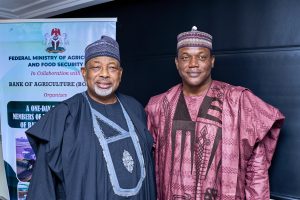















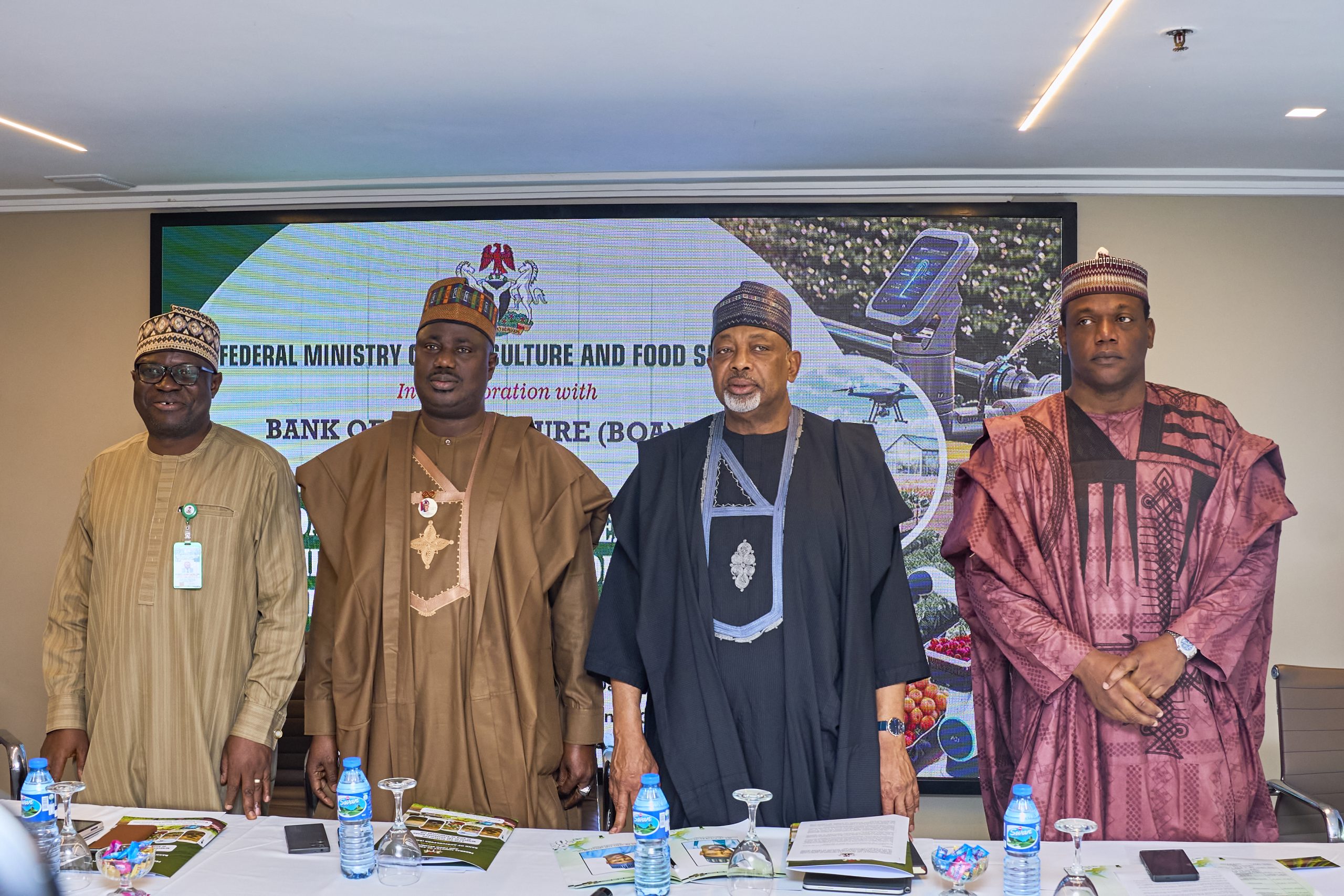
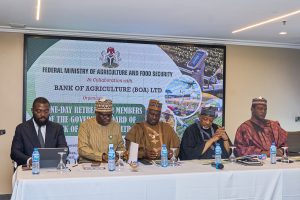
The chairman of the Board of Bank of Agriculture, BOA Mohammed Babangida has pledged that the board would work with the Ministry of Agriculture, BOA management and other stakeholders to build a stronger, more efficient and impactful institution capable of supporting Nigeria’s agricultural transformation.
Speaking on Tuesday at a one-day retreat for members of the newly inaugurated governing board of the Bank of Agriculture in Abuja, Babangida said the retreat provided an opportunity for the board to deepen its understanding of the bank’s mandate, operations, financial position, strategic direction, opportunities and challenges.
He said the board’s performance should ultimately be measured by the impact the institution makes on farmers, agribusinesses, rural communities, food production, employment and national food security.
The chairman pledged that the board would work with the Ministry of Agriculture, BOA management and other stakeholders to build a stronger, more efficient and impactful institution capable of supporting Nigeria’s agricultural transformation.
Meanwhile, the federal government has tasked the Bank of Agriculture (BOA) to develop affordable, timely and responsive financing products capable of meeting the peculiar needs of farmers and agribusinesses as a cornerstone of national food security and economic transformation.
Minister of Agriculture and Food Security, Abubakar Kyari said access to appropriate finance remained critical to achieving food security, job creation, poverty reduction and agro-industrial development.
Speaking at the one-day retreat, Kyari said the bank, as Nigeria’s specialised agricultural development finance institution, must prioritise underserved groups, including smallholder farmers, women, youths, agricultural cooperatives and agribusiness enterprises.
The minister said agricultural financing must go beyond making funds available, stressing that the BOA should design products that reflect the seasonal nature of farming and the different financing requirements of individual agricultural value chains.
“Financing must not only be available; it must also be appropriate, timely, affordable and responsive to the realities of agricultural production
The Bank should therefore continue to explore innovative products that recognize the seasonal nature of agriculture and the specific financing needs of different value chains. We must also promote financial inclusion and ensure that no segment of our agricultural population is left behind,” the minister said.
He urged the board to explore innovative financing mechanisms, blended finance arrangements, guarantees and credit enhancement schemes to reduce the risks associated with agricultural lending while expanding access to finance.
According to Kyari, stronger collaboration among the ministry of agriculture, state governments, development partners, commercial and development finance institutions, private investors, commodity associations and cooperatives would be essential to mobilising additional resources and expanding the bank’s reach.
Kyari also charged the board to develop a practical, measurable and time-bound strategic roadmap for repositioning the BOA in line with the Renewed Hope Agenda and the Federal Government’s priorities on agriculture and food security.
He said the roadmap should contain clear priorities, targets, responsibilities and mechanisms for monitoring implementation, while urging the board to uphold transparency, accountability, integrity and prudent financial management.
In his remarks, the Minister of State for Agriculture and Food Security, Aliyu Sabi Abdullahi, said the BOA had a critical role in translating the federal government’s agricultural policies into tangible outcomes by improving access to sustainable financing.

Abdullahi said the bank must become more responsive to the realities confronting farmers and agribusinesses and strengthen its capacity to develop innovative financial instruments suited to the peculiarities of agricultural production.
He said the success of the institution would extend beyond its financial performance, as its effectiveness would influence farmers’ ability to produce, businesses’ capacity to invest, youth employment, food availability and the resilience of the Nigerian economy.
Earlier, the Permanent Secretary of the Federal Ministry of Agriculture and Food Security, Marcus Ogunbiyi, said the persistent financing gap in agriculture required the BOA to deploy innovative, patient, affordable and risk-sensitive lending mechanisms.
Ogunbiyi noted that agricultural production was exposed to weather and climate risks, pests and diseases, commodity price fluctuations, infrastructure constraints and market access challenges, making conventional lending models inadequate for the sector.
He said the bank must provide appropriate financial products to farmers, cooperatives, agribusinesses, processors, aggregators and other actors across agricultural value chains.