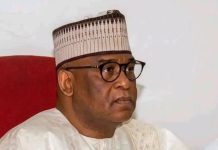






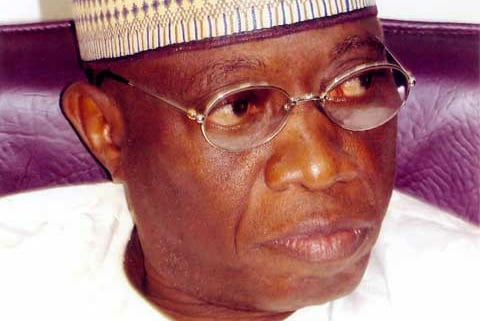


The heavy clicking of the typewriter keys from the glory days of the 1980s has long faded, but a new, profound silence has just descended on the fraternity of the pen. Yakubu Mohammed, the quintessential gentleman of the press and a cornerstone of the legendary Newswatch quartet, has filed his final copy.
Mohammed died on Wednesday at the age of 75 after a protracted illness.
But his journey did not begin at Newswatch. He cut his teeth at the New Nigerian. Still, it was his tenure as the executive editor of Newswatch that cemented his status as a titan in the development of Nigeria’s journalism ecosystem.
UNILAG ALUMNUS
Mohammed began his education at St Joseph’s Primary School, Ayangba, completing primary school in 1964, and later attended Government Secondary School, Okene, from 1965 to 1969. He studied at the University of Lagos, earning a B.Sc between 1972 and 1975. In addition, he did postgraduate studies at the Glasgow College of Technology in Scotland from 1978 to 1979, a training that combined journalism with management and shaped his later leadership roles.
He started at New Nigerian as his PPA during his NYSC and was formally employed in August 1976. It was after he served as associate editor at the organisation for two years that he left for Britain to study business and management. The move was to boost his qualifications for higher managerial roles. He returned to Nigeria in 1979, and in January of 1980, he was promoted to managing editor.
A DECISIVE MOVE TO CONCORD

A month later, in February 1980, MKO Abiola, who would later become the presumed winner of the June 12 1993, presidential election, started Concord newspaper.
According to Mohammed, “three or four days after they started, their printing press broke down in the night…and they said that the only newspaper that could print for them was New Nigerian”.
He said some of his staff who left New Nigerian for Concord led Abiola and some of his team to his (Mohammed’s) house in Shomolu.
“That was how I met Abiola in February 1980, and for about four days, we were printing for them. Then, in November of that year, at about 11 pm, Abiola showed up in my house and said he heard I was planning to leave New Nigerian and that if the story was true, I should join Concord as editor,” Mohammed said.
“He said he was giving me two weeks to make up my mind. He was travelling to the U.S. When he returned, he didn’t ask me if I had made up my mind. He simply called to say Yakubu, your letter of appointment is on the way. That was how I became deputy editor of National Concord.”
His contribution to National Concord was quite transformative, such that he “increased the sale of National Concord from 99,000 copies daily to over 400,000 copies in just two years”.
MIDWIVED CREATION OF KOGI STATE

Mohammed was born one night in April 1950 in Ologba, a settlement in Dekina LGA of what is now Kogi state, to Akpa Mohammed Yusufu and Asmau Idu, both of royal lineage. There was no Kogi then. It did not exist until 1991, and Mohammed would later play a quiet but decisive role in its creation.
He was never entirely sure of his exact date of birth, but he chose the 4th of April anyway. His name was given to him by his “exciting” paternal aunt, Aye.
For years, proposals for the creation of Kogi state had been made and abandoned. Each attempt collapsed under the weight of politics. Then, in 1991, Aliyu Obaje, the Attah of Igala, paid a visit to Nigeria’s military president, Ibrahim Babangida, at his Lagos residence and raised the issue once again.
According to Mohammed, Obaje was keen to ensure that the request did not fade from the president’s memory. He directed some of his subjects resident in Lagos to follow up. They resolved to send a formal letter of appreciation to Babangida for hosting the monarch. Mohammed was one of the signatories to the letter and was selected to deliver it personally to the president.
One day, while still working at Concord, Mohammed arrived at the office to be told that the president had called for him. Babangida wanted to see him in Abuja. He spent a couple of days in the federal capital territory before the meeting was finally held.
“Just the two of us, for two hours, the fate of our new state was sealed,” Mohammed recalled. “During those two hours, I, who by duty and professional habit had always been the interviewer, became the interviewee.”
“It was Babangida who asked the questions. Why was a new state necessary? Could its people coexist peacefully? Did it have the potential for social, political, and economic development?
“Having convinced him with my answers,” Mohammed wrote, “the President then said to me: ‘Congratulations, Yakubu. You now have your state.’”
With that exchange, Kogi state moved from a long-deferred idea to a political certainty.
ARCHITECT OF A REVOLUTION

To understand the persona of Mohammed in Nigeria’s journalistic evolution, one must rewind to 1984. The country was under military rule, and the air was heavy with uncertainty and fear. It was in this climate that four young journalists — Dele Giwa, Ray Ekpu, Dan Agbese, and Mohammed — dared to do the unthinkable. Dubbed the “four musketeers”, they resigned from their secure, high-profile positions at Concord to found Newswatch, a weekly news magazine that would permanently alter the DNA of Nigerian journalism.
In his memoir, “Beyond Expectations”, Mohammed explained that Newswatch was born out of a rift with Abiola, the proprietor of Concord. He said he had no personal feud with Abiola, but that “his people” had turned the publisher against him and, by extension, against Giwa, the editor of Sunday Concord, and Ekpu, chairman of the editorial board.
Mohammed recalled that he repeatedly tried to contain the crisis, often pacifying Abiola whenever he complained about the others. But one incident, he said, “pained him most”. A dressing competition published in Sunday Concord rated Giwa as better dressed than Abiola.
Furious, Abiola stormed into Mohammed’s office to vent his anger. As usual, Mohammed sought to calm him down.
“How can anyone be better dressed than you, when you are the one giving us the money and paying our salaries?” he asked.
“You go out of your way to buy things for us when you travel, and when we want to travel, you give us money to buy the best suits and shoes. To the point that Candido called us Benzy journalists wearing Gucci shoes. So, how can anyone say he is better dressed than you?”
The path ahead was anything but easy. Mohammed said the Newswatch team faced repeated proscriptions and harassment, culminating in the ultimate tragedy, the assassination of Giwa in 1986. After Giwa’s death, Mohammed, alongside Ekpu and Agbese, had to shoulder the crushing weight of grief, fear, and responsibility.
Yet Mohammed and journalism seemed destined for each other. In his memoir, he described journalism as “my passport to the whole wide world”. Whatever the profession took from him, it gave him far more, leaving him with no regrets. That deep, almost umbilical connection perhaps explains how he weathered the many storms that followed.
He recalled that journalism had chosen him long before Newswatch. As a schoolboy at Government Secondary School, Okene, Kogi state, he wrote an essay titled: “What disgusts me most in Government Secondary School, Okene”. Instead of receiving the 12 strokes of the cane and expulsion he expected, Mohammed was appointed to the editorial board of the school newspaper. It was an early signal that his life’s work had already found him.
THE REVERSAL OF NEWSWATCH’S FORTUNE
In 2011, after 25 years of publishing Newswatch, the founders resolved to expand the operations of the weekly magazine. The plan was ambitious: a daily newspaper, a radio station, and the repositioning of their fledgling book arm, Newswatch Books Limited.
The expansion was meant to be the final chapter of a long career. After four decades in journalism, each of the founders intended to retire, leaving behind an institution strong enough to outlive them.
To achieve this, Mohammed said they decided to seek new investors, much as they had done in 1984 when Newswatch was first conceived. Through this process, they were introduced to Jimoh Ibrahim, a businessman and publisher, as a potential core investor.
In his memoir, Mohammed titled the section recounting what followed as “Reversal of Fortune”.
“There was nothing to indicate to us that we were about to sign the death warrant of our company, Newswatch Communications Limited,” he wrote.
“We did not anticipate that any fate worse than our 13-day ordeal in Abacha’s gulag would come our way again. But the calamity that befell us after a handshake with Jimoh Ibrahim was as painful as death.”
Unaware, the founders signed over the company to Ibrahim. Mohammed said the new owner eventually “reluctantly approved that the company should pay us our retirement benefits”. For this, Ibrahim made available N310 million, far short of the N510 million stipulated in the share purchase agreement. The balance of their terminal benefits, he wrote, was never paid.
In 2012, Ibrahim shut down the company, reportedly citing complaints over unpaid salaries. The closure triggered a series of legal battles between him and the former owners.
“At the time of this writing, he has tied us down in court for nearly 12 years,” Mohammed wrote. “Not only did he close the company down, he stripped it of all its assets, including its vibrant library and even a dedicated transformer for improved power supply.”
What had meant the world to the four men was reduced to nothing in less than two years.
Still, in a bid to keep the spirit of Newswatch alive while exploring out-of-court settlements to reclaim the company, Mohammed and his colleagues launched a special publication, Newswatch Plus, which debuted in 2019.
FORAY INTO POLITICS
Mohammed’s foray into politics and his gubernatorial ambition started with a dream he and his wife, Rabi, had while they were on pilgrimage to Mecca in 2008.
The journalist said in the dream, “I was presented with the flag of the governor of my state.”
This dream was followed by pressure from some of his friends and colleagues, including Isa Ichaba, Isaac Onu, and even Mohammed Idris, then governor of the state, backed with great support from top political powers in the country, including Babangida.
He initially expressed his disinterest in the role, but eventually accepted the offer over his “passion for the development of the state and the upliftment of the downtrodden in our society”.
For the 2015 governorship election in the state, Mohammed vied for the ticket of the All Progressives Congress (APC) against key figures, including Yahaya Bello, James Ocholi, and Abubakar Audu. He, however, lost the primary, and the party’s ticket went to Bello.
He made another attempt in 2019 and again lost the ticket to Bello.
“Today, as I look back, I am proud to say that just as I have no regrets in politics, I equally have no regrets choosing journalism as a career and a profession. Regrets? Perish the thought,” he said in his memoir.
“Can anyone forget the story of Newswatch, Nigeria’s, nay Africa’s trail-blazing, weekly newsmagazine?”
THE FINAL EDIT
Beyond the newsroom, Mohammed played significant roles in Nigeria’s national life. He served on the national publicity committee for the transition to democratic civil rule that ushered in the Shehu Shagari administration in 1979. Earlier, in January 1978, he was part of the committee that produced Nigeria’s current national anthem, working alongside eminent literary figures, including the late author Chinua Achebe.
During the years of military rule, Mohammed was deeply involved in the struggle for democracy and became a familiar presence in security detention camps, visiting and standing in solidarity with detained activists and colleagues. In later years, he served in academia, holding office as pro-chancellor and chairman of the governing council of Ahmadu Bello University, Zaria, from 2005 to 2007.
In his later years, Mohammed remained a statesman of the journalism profession. Even as the media landscape shifted, his principles of fairness, balance, and courage remained the gold standard. He wrote with a deep sense of history. His columns were not just reactions to the news of the day; they were sociopolitical essays that diagnosed the Nigerian condition with empathy and intellect.
Mohammed has now put down his pen, or lifted his fingers off the keypads, if we are to put it so. The ink has dried, and the cursor is stationary. But the stories he told, the institutions he built, and the courage he displayed remain etched in the archives of a grateful nation.
He was a journalist until the end, and his life was his greatest story.